Blogs Resort Seasonal Marketing with AI: Promote the Dates You Can Sell
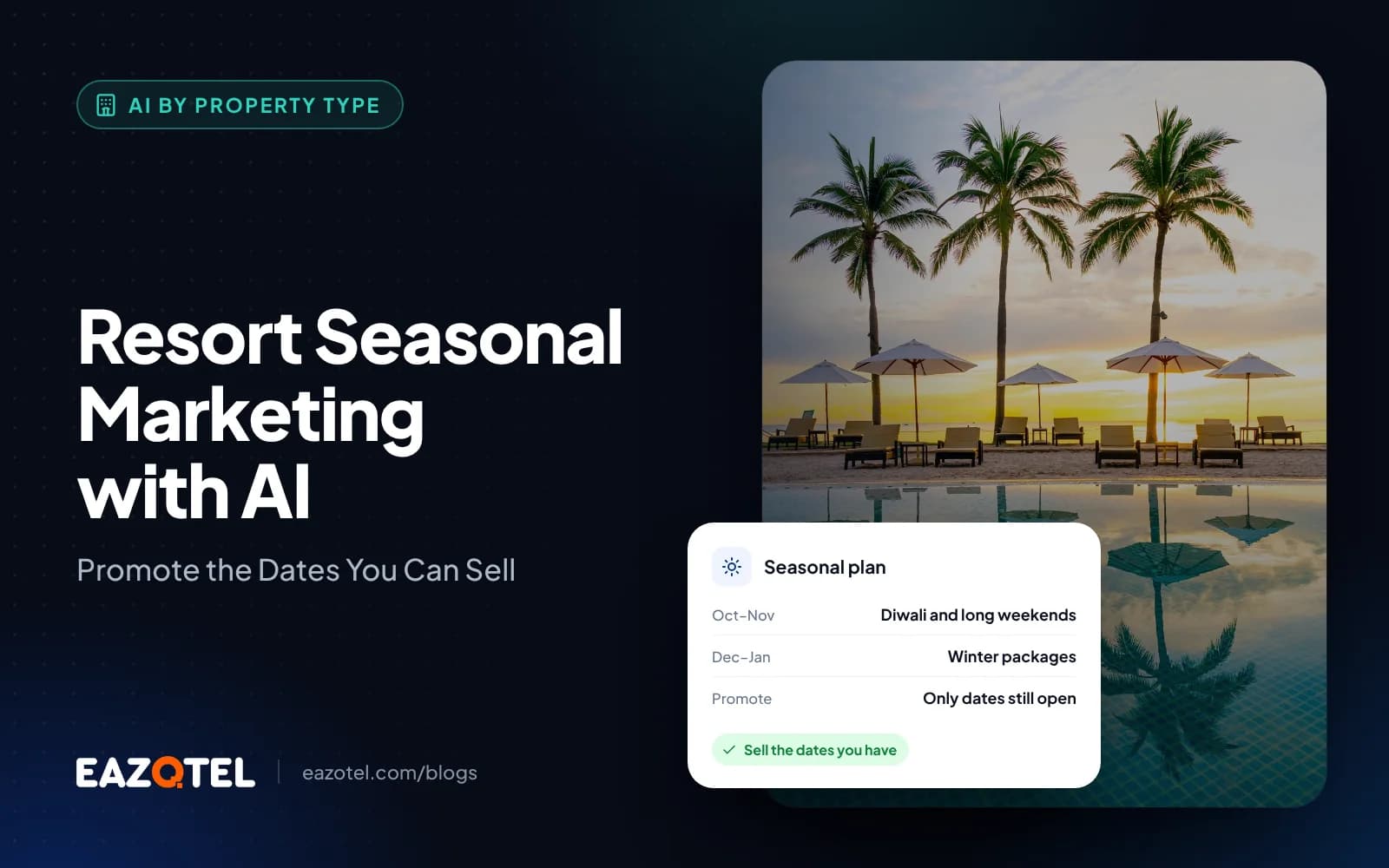
Resort Seasonal Marketing with AI: Promote the Dates You Can Sell
A resort may sell weekends easily while struggling with weekdays. More demand is only useful when it matches inventory and the experience available during the promoted dates.
Start with the occupancy pattern
Review available dates, room categories and the reasons guests enquire. Separate demand peaks from periods needing support. Avoid assuming every seasonal campaign should promote the same offer.
Identify experiences the resort can reliably provide during those periods. Weather-dependent activities need accurate explanations and suitable alternatives.
Match the offer to a guest need
Create a clear package around the stay, not just a reduced price. Explain inclusions, valid dates and the guest it suits.
An illustrative midweek offer may target guests with flexible dates. Qualification should record that flexibility so reservations can suggest genuinely available options.
Connect campaign and sales feedback
Record requested dates, qualified enquiries and lost reasons. If many guests seek sold-out weekends, update the advertisement or suggest alternative dates through an appropriate conversation.
Keep current offers consistent across website, WhatsApp and staff quotations. Expired conditions should not remain in automated replies.
Evaluate the intended inventory
Measure bookings and contribution for the dates the campaign was designed to support. A total booking increase may hide that the promoted low-demand period remained empty.
Compare similar seasonal conditions and account for rate changes. Useful AI decision support should explain both demand and the resort’s ability to fulfil it.
A practical check for your hotel
Compare the dates requested by campaign leads with the available inventory the resort intended to promote.
The offer and follow-up should address genuine saleable dates and explain suitable alternatives without inventing availability.
Measure the result: Measure contribution for the targeted low-demand period rather than the property’s total booking count.
Questions hotel teams ask
Should low-demand dates always have discounts?
Consider package value, suitable segments and experience context before reducing price. Availability and margin should guide the offer.
What should the CRM record for seasonal planning?
Requested dates, flexibility, stay purpose, quotations and lost reasons can reveal where demand and inventory differ.
Put the workflow into practice
Explore Eazotel as your AI Hospitality Platform. Bring your property's current workflow to a consultation and ask the team to demonstrate the relevant capabilities, connections and handovers for your hotel.
Related guides
- AI Technology for Boutique Hotels: Preserve Personal Service While Organising Sales
- AI for Business Hotels: Prioritise Practical Enquiries and Weekday Demand
- AI for Villas and Homestays: Explain Occupancy, Access and House Rules Clearly