Blogs Multilingual Hotel Websites: Localise the Booking Decision
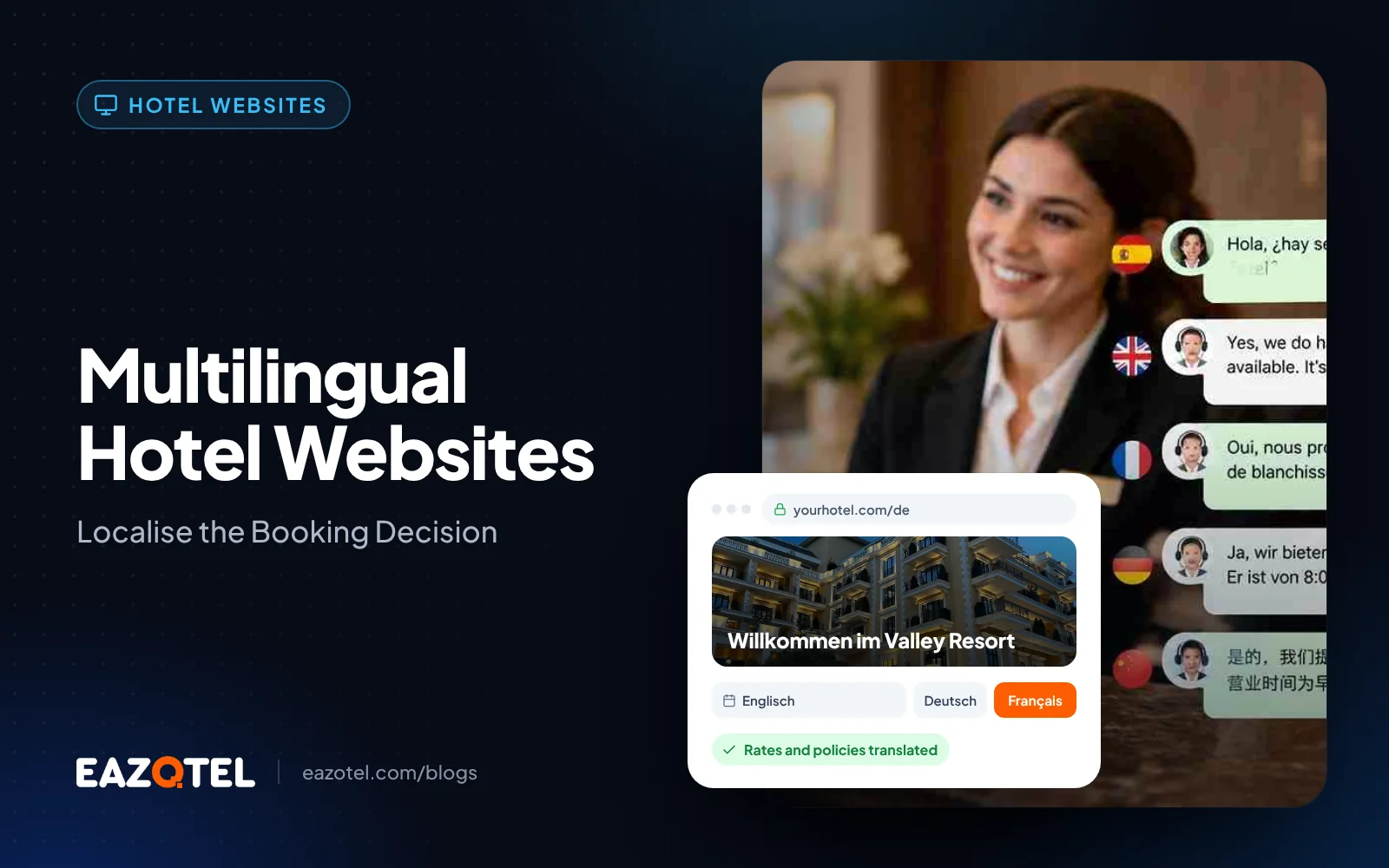
Multilingual Hotel Websites: Localise the Booking Decision
International guests need more than a translated welcome message. They need to understand room choices, meal inclusions, dates, payment and cancellation conditions well enough to make a booking.
Prioritise languages using real demand
Review enquiry language, guest origin and staff capacity. Begin with markets the property can serve effectively. A translated page should connect to a booking or enquiry route that supports the same language needs.
Translate the decision-making content, including navigation and policy explanations. Keep room names and package terminology consistent so staff can identify what the guest saw.
Use clear language routes
Google recommends distinct URLs for language variants and appropriate hreflang annotations. Make language selection visible and let guests move between versions. Do not assume a visitor’s location determines their preferred language.
An illustrative Spanish page for a hotel should explain the same stay as its English equivalent. It should not retain an outdated package because only the English version was updated.
Localise practical details carefully
Show unambiguous dates, the charged currency and clear transport information. A display-currency conversion should not be presented as the final payment amount unless the checkout actually charges that currency.
Ask a competent reviewer to check booking-critical terminology. Machine-assisted translation can support the process but should not approve commercial facts by itself.
Evaluate the complete journey
Track language-page enquiries, booking starts and unresolved language handovers. Review guest questions for missing explanations.
Maintaining multilingual content is an ongoing responsibility. Assign an owner to propagate changes so all versions describe the same rooms and conditions.
A practical check for your hotel
Change a cancellation condition in the source language and inspect the corresponding translated page and enquiry response.
The translated journey should preserve the new meaning and make the same room and booking conditions understandable.
Measure the result: Track outdated language variants and language-specific enquiries caused by unclear terms.
Questions hotel teams ask
Should we create pages for every country?
Create language or regional variants when content and service needs differ meaningfully. Country-name substitutions alone do not help guests.
Does hreflang translate the website?
No. It helps identify language or regional versions to search systems. The actual pages still need useful translated content.
Put the workflow into practice
Explore Eazotel as your AI Hospitality Platform. Bring your property's current workflow to a consultation and ask the team to demonstrate the relevant capabilities, connections and handovers for your hotel.
Related guides
- Hotel Website Builder: Create a Website That Supports Direct Bookings
- Hotel Website Conversion Audit: Find Why Visitors Do Not Book
- How to Choose Hotel Website Software: A Buyer’s Checklist