Blogs Hotel Google Ads Search Terms: Identify Intent Before Changing Keywords
Hotel Google Ads Search Terms: Identify Intent Before Changing Keywords
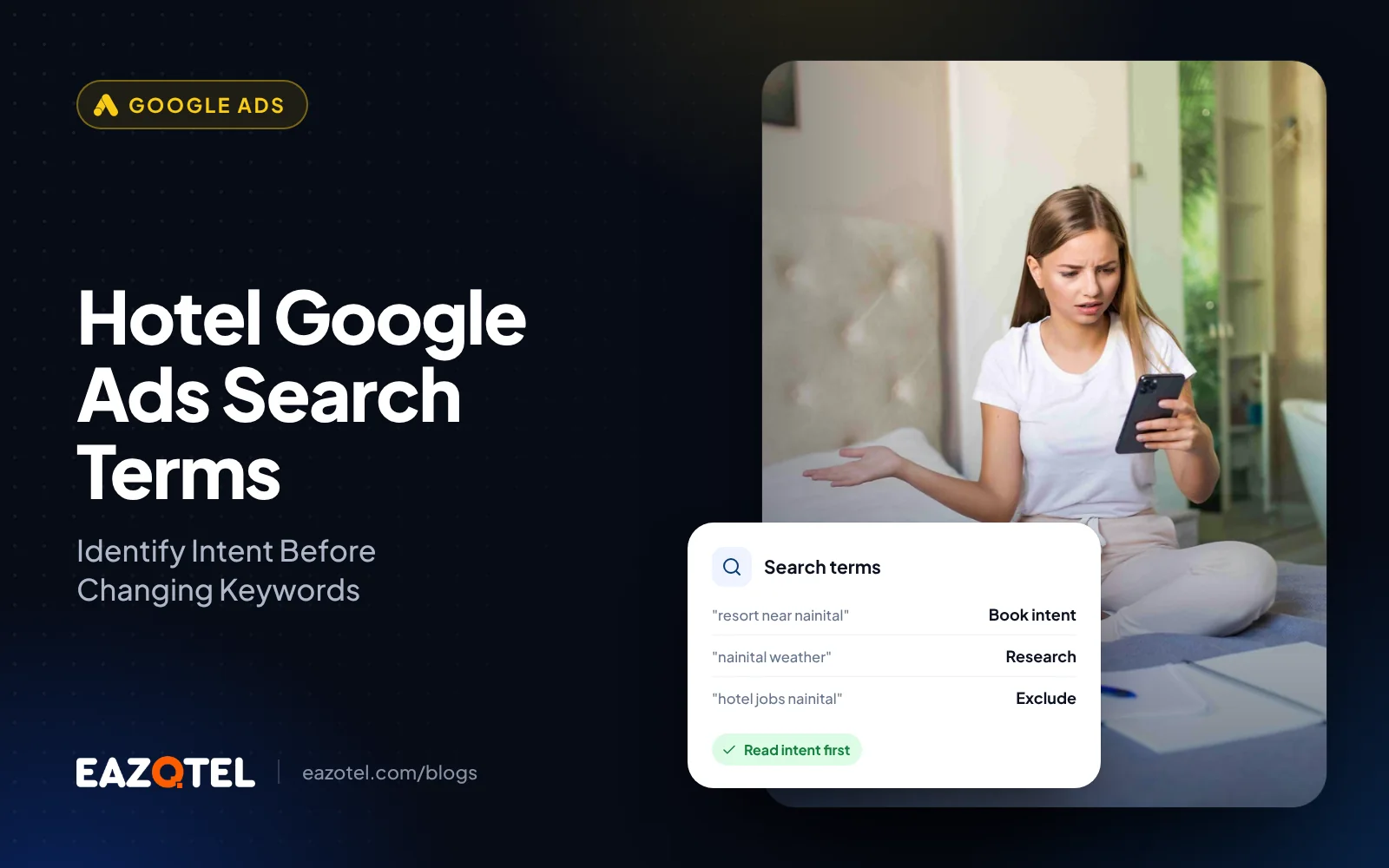
A hotel keyword describes the targeting choice. A search term describes what a person actually searched before the advertisement appeared. Reviewing that difference can reveal demand the hotel can serve and traffic it cannot.
Group terms by guest task
Separate branded searches, destination stays, nearby accommodation, event requests and irrelevant intent. Use the hotel’s actual facilities and location to judge fit.
A room-only business hotel should assess “resort with activities” differently from “hotel near conference centre.” Do not classify intent solely from click volume.
Connect terms to useful outcomes
Review the available search-terms report alongside enquiry quality and bookings. Google’s report and search-terms insights present different views; insights group demand into categories, so their figures should not be assumed identical to a term-level report.
An illustrative “family resort” term may generate calls asking about facilities the hotel does not have. Staff feedback helps explain why the traffic is unsuitable.
Change targeting with care
Consider relevant landing pages, clearer advertisement copy or appropriate negative keywords. Review the effect of a negative before applying it broadly, as a word can appear in both relevant and irrelevant requests.
Keep a change log. Avoid altering many settings simultaneously if the aim is to understand the cause of a performance change.
Evaluate the commercial result
Track irrelevant enquiry reduction, qualified enquiry cost and mature booking outcomes. Allow for visibility limits in reported search data.
The purpose is to improve the match between a searcher’s task and a stay the property can provide. A smaller number of more relevant enquiries can be more valuable than a larger click total.
A practical check for your hotel
Review a small group of search terms with staff who handled the resulting room or event enquiries.
They should explain property fit and actual guest intent before keywords or exclusions are changed.
Measure the result: Compare irrelevant enquiry reduction and mature outcomes after a documented targeting correction.
Questions hotel teams ask
Should we add every successful term as a keyword?
Review intent, volume, existing targeting and outcomes first. A term-level result is one piece of evidence, not an automatic instruction.
Can search terms explain all campaign performance?
No. Landing pages, rates, availability, tracking and staff response also affect outcomes.
Put the workflow into practice
Explore Eazotel as your AI Hospitality Platform. Bring your property's current workflow to a consultation and ask the team to demonstrate the relevant capabilities, connections and handovers for your hotel.
Related guides
- Google Ads Insights for Hotels: Turn Campaign Data into Better Decisions
- Hotel Ads CPC Rose After a Budget Increase: What to Check
- Hotel Search Ads vs Performance Max: Choose by Data and Purpose