Blogs Hotel CRM Pipeline: Give Every Enquiry an Owner and a Next Action
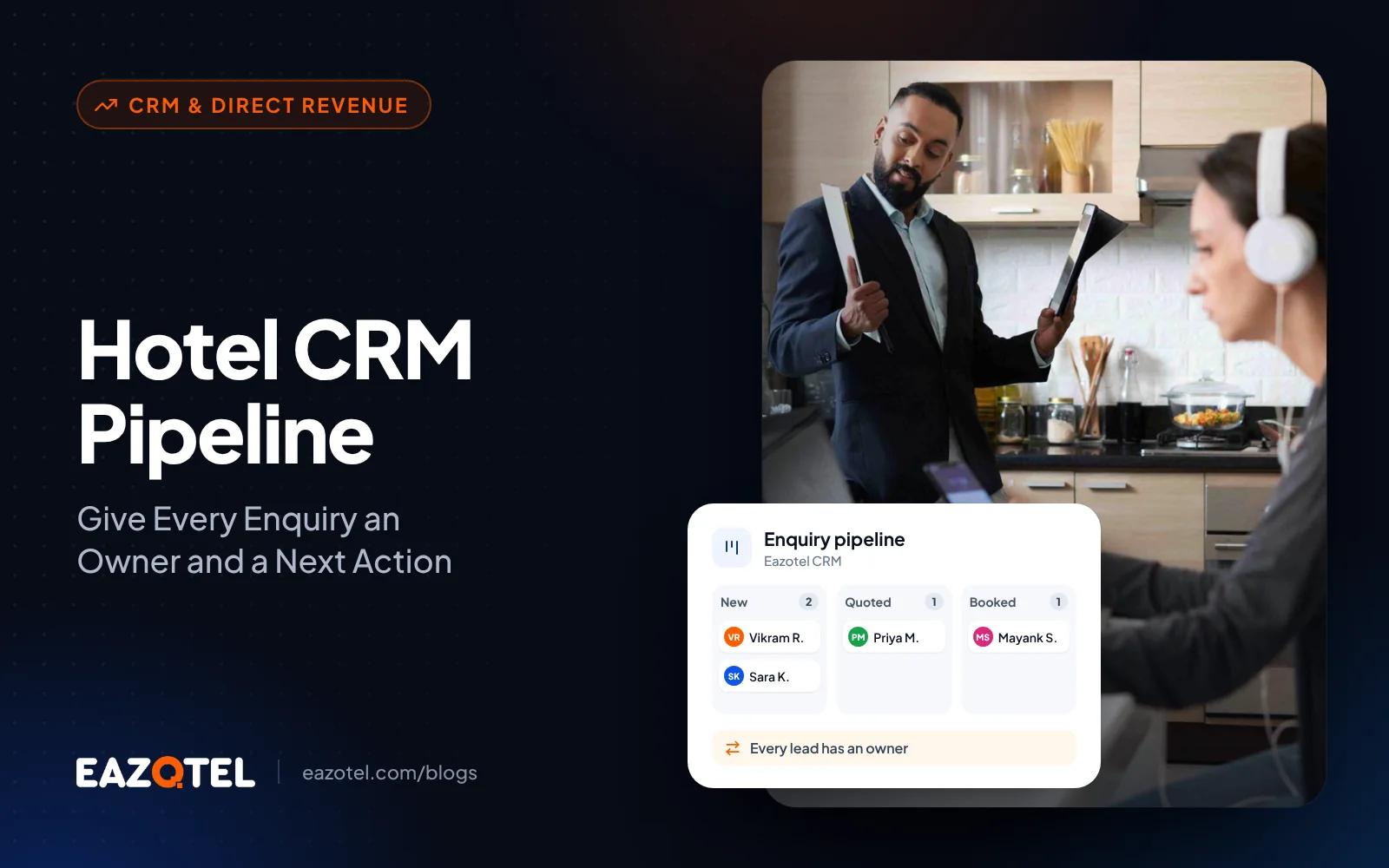
Hotel CRM Pipeline: Give Every Enquiry an Owner and a Next Action
A CRM pipeline should describe what needs to happen next. Colourful stages are not useful when staff move leads inconsistently or leave quotations without an owner.
Define observable stages
Use stages such as new enquiry, qualification pending, qualified, quotation sent and booked. Add lost and inactive states with clear definitions. Keep event-specific stages where they genuinely support a different process.
A stage should reflect an event or verified condition. “Hot” is difficult to interpret unless the hotel defines the evidence behind it.
Attach an owned next action
Record who must contact the guest, what needs checking and when the next action is due. A quotation stage should retain the offer and unresolved question.
For example, a guest waits for confirmation of connecting rooms. The next task belongs to reservations, not an automated generic reminder asking whether the guest wants to book.
Keep outcome states accurate
Mark booked only from a verified reservation. Record date changes and cancellations according to the hotel’s reporting rules. Stop incompatible follow-ups when the state changes.
Use lost reasons that help decisions, such as unavailable dates, package mismatch or no response after a defined process. Avoid an all-purpose “not interested” label.
Review the pipeline operationally
Check overdue tasks, stalled quotations and unresolved handovers. Compare stage conversion using comparable enquiry cohorts.
A weekly review should identify a short list of actions employees can complete. The pipeline is successful when it supports actual guest conversations and verified outcomes, rather than merely displaying more records.
A practical check for your hotel
Choose five open quotations and ask each owner to identify the unresolved question and next action.
The pipeline should show an observable stage, accountable employee and realistic follow-up rather than a vague interest label.
Measure the result: Review overdue tasks and quotations stalled without a defined reason.
Questions hotel teams ask
How many pipeline stages should we use?
Use the fewest stages that represent meaningful sales actions. Add complexity only when the team needs it.
Should a lead score replace pipeline stages?
No. Scores can guide priority, while stages and tasks record actual progress and responsibility.
Put the workflow into practice
Explore Eazotel as your AI Hospitality Platform. Bring your property's current workflow to a consultation and ask the team to demonstrate the relevant capabilities, connections and handovers for your hotel.
Related guides
- Hotel Direct Booking Engine: Make Reservations Clear from Selection to Confirmation
- Hotel CRM vs Spreadsheets: When Shared Sales Records Become Necessary
- Hotel Deposits and Payment Links: Keep the Sales and Booking States Aligned