Blogs Hotel Brand vs Non-Brand Google Ads: Report the Two Jobs Separately
Hotel Brand vs Non-Brand Google Ads: Report the Two Jobs Separately
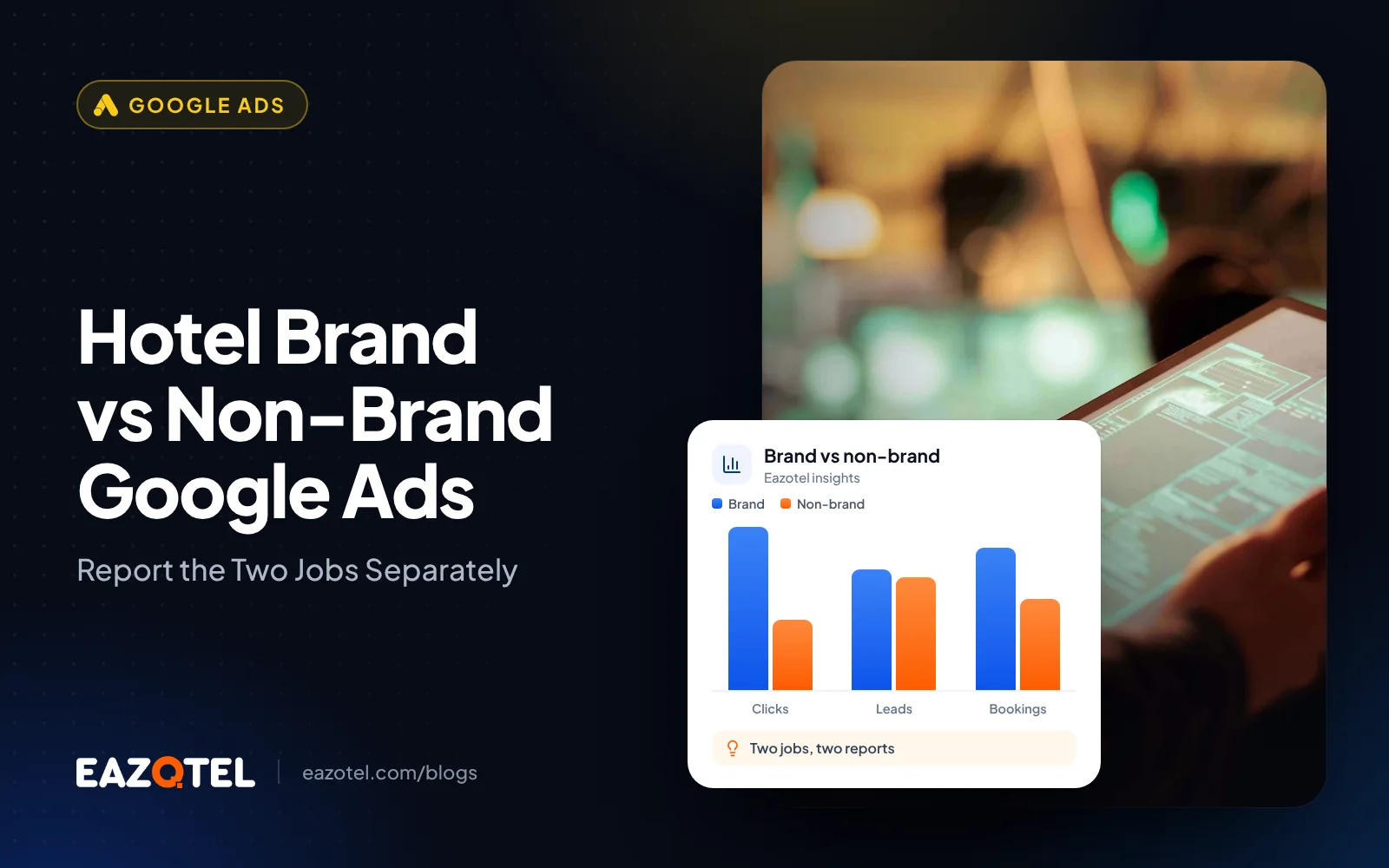
A traveller searching the hotel’s name already knows the property. Someone searching for a resort in the destination may be discovering it for the first time. Combining both journeys can hide what advertising actually contributes.
Define the categories
Use the hotel’s brand names and relevant spelling variants to identify branded intent. Non-brand searches describe destinations, stay types or needs without naming the property.
Review ambiguous terms and keep the definition documented. The same classification should apply when comparing periods.
Assign different evaluation questions
For branded demand, ask whether guests can find the correct offer and complete a direct booking. For non-brand discovery, ask whether the campaign attracts suitable new enquiries at a sustainable cost.
An illustrative hotel has strong brand bookings after a social campaign. Reporting all search bookings as newly created search demand would overlook that wider context.
Inspect booking value and acquisition
Compare qualified enquiries, confirmed bookings and contribution by category. Avoid letting inexpensive branded conversions conceal weak non-brand performance.
Attribution does not automatically show incrementality. Some branded guests may have found the hotel organically or through another channel.
Use the separation for better decisions
Review message relevance, landing destination and available dates for each group. Test changes with clear definitions and sufficient outcome maturity.
A separate report helps owners see whether spend supports existing demand or reaches new relevant guests. Both jobs can be useful, but they should not be described as the same thing.
A practical check for your hotel
Separate branded and non-brand intent in a sample report and connect each group to its actual enquiry outcomes.
The report should explain the two demand roles without describing every branded booking as newly created awareness.
Measure the result: Compare acquisition quality and contribution with the attribution assumptions visible.
Questions hotel teams ask
Should every hotel run branded ads?
Evaluate the competitive environment, direct-booking journey and observed value. There is no universal budget rule.
Does non-brand always mean a new guest?
No. It describes the search intent, not verified guest history. Use CRM records where reliable matching is available.
Put the workflow into practice
Explore Eazotel as your AI Hospitality Platform. Bring your property's current workflow to a consultation and ask the team to demonstrate the relevant capabilities, connections and handovers for your hotel.
Related guides
- Google Ads Insights for Hotels: Turn Campaign Data into Better Decisions
- Hotel Search Ads vs Performance Max: Choose by Data and Purpose
- Hotel Offline Conversion Tracking: Record What Happens After the Lead