Blogs AI Hospitality Platform: Connect Hotel Marketing, Conversations and Bookings
AI Hospitality Platform: Connect Hotel Marketing, Conversations and Bookings
A hotel can generate enquiries all day and still lose bookings. The problem often appears between systems: a message stays on a phone, a quotation is never followed up, or advertising reports cannot explain which guests actually booked. An AI hospitality platform should help the team complete that journey.
For Eazotel, this is the positioning: connect demand generation, conversations, hotel websites, reservations and decision support around a usable guest record. Each connection should solve a hotel task rather than simply add another dashboard.
Understand the five connected layers
The discovery layer brings visitors from search, advertising and referrals. The website layer explains rooms and packages. The conversation layer handles WhatsApp, chat and calls. The CRM layer assigns ownership and records progress. The insight layer helps managers examine outcomes and choose the next action.
A booking engine or property management system remains the authoritative source for its responsibilities. AI should request confirmed information from those systems rather than invent availability or treat a sales message as a reservation.
Follow one guest through the platform
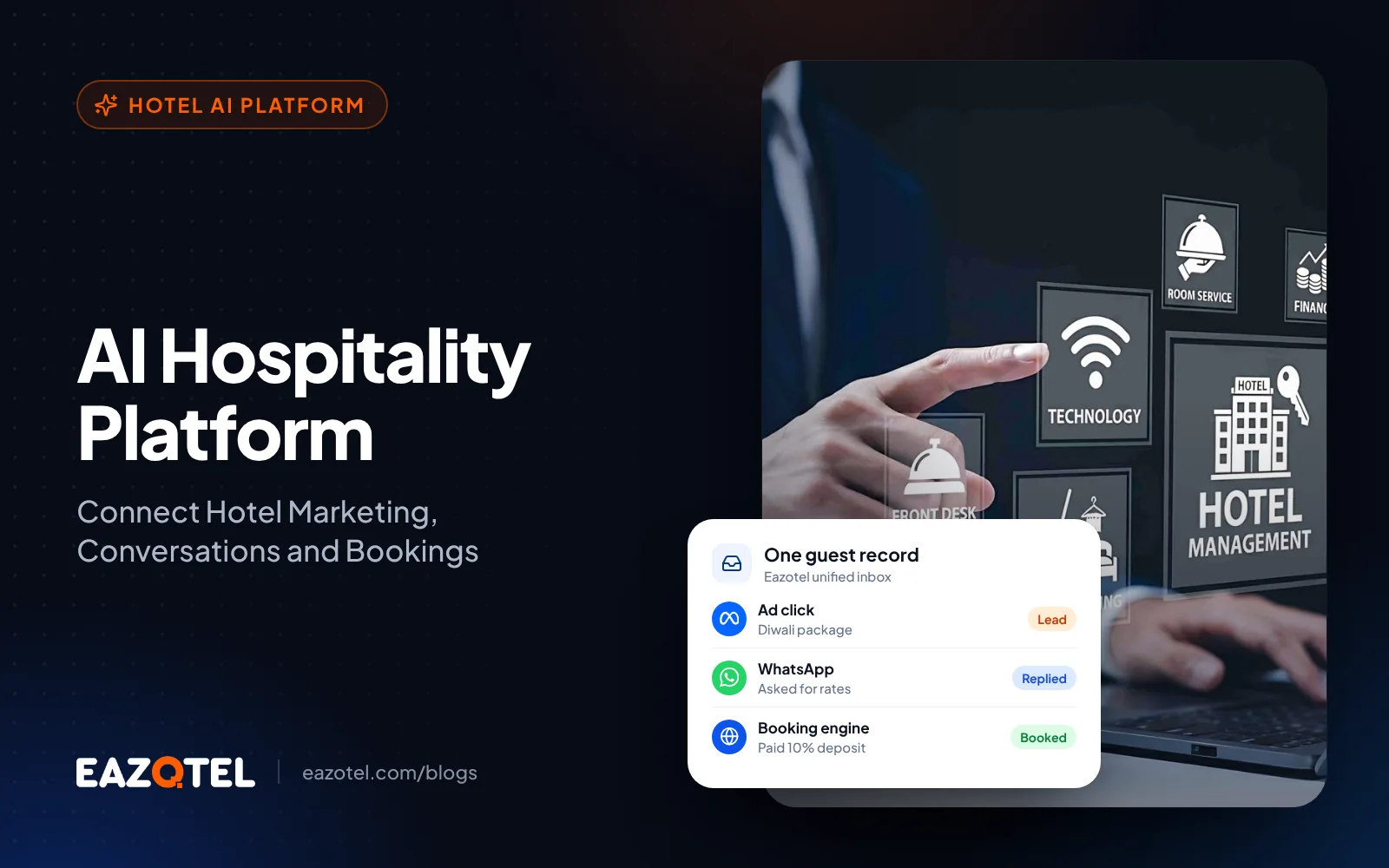
Imagine a family responding to a resort advertisement. The enquiry arrives with its campaign reference. An assistant collects dates, adults, children and the experience requested. Reservations receives a summary, confirms a suitable room and sends the correct quotation. A relevant reminder follows if the family is still deciding.
When a booking is confirmed, the record changes state and sales reminders stop. Marketing can then compare the campaign’s spend with confirmed bookings. This is an illustrative workflow, not a claim that every integration is available on every plan.
Choose the first connection carefully
Start where enquiries are most often lost. A hotel receiving many WhatsApp requests may need shared ownership before sophisticated analytics. A property with strong enquiries but weak checkout may need booking-flow improvements first.
Ask prospective providers to demonstrate a duplicate enquiry, an unavailable room, a failed payment and a human handover. Those moments reveal more than a polished opening screen.
Measure completion, accuracy and revenue
Useful measures include qualified enquiry rate, time to a meaningful response, completed follow-ups, confirmed booking rate and acquisition cost. Keep message clicks separate from paid reservations. Record cancellation adjustments and the period in which bookings matured.
The platform should help employees understand what to do next and why. A unified screen has little value if nobody owns the lead or the guest still receives contradictory answers.
A practical check for your hotel
Follow one sample guest from a campaign enquiry through qualification, quotation, confirmed booking and a later date change.
Every step should retain the same property and opportunity context, while the verified reservation source controls the booking state.
Measure the result: Count missing handovers, repeated questions and contradictory messages across the complete journey.
Decide what the platform must remember
The guest record should preserve the enquiry purpose, agreed next action and verified outcome. It should also retain meaningful changes. A date amendment, declined offer or confirmed payment can alter what the hotel ought to say next. Connecting systems without propagating those changes leaves the guest exposed to contradictory messages.
Evaluate platform value in three views
Reservations needs a queue of work it can complete. Marketing needs reliable demand and outcome definitions. The owner needs an explanation of acquisition economics and operational bottlenecks. A platform demonstration should show each view using the same underlying example, not three unrelated sample dashboards.
Ask which parts are available today, which depend on integrations and which require a future product release. That question allows Eazotel to present a broad AI Hospitality Platform direction while giving the hotel a concrete implementation it can evaluate. The first purchase should solve an observed problem with a defined owner and outcome.
Questions hotel teams ask
Does an AI hospitality platform replace a PMS?
It can connect sales and guest communication with a PMS, but reservations, inventory, billing and operational ownership need explicit integration boundaries. Check the exact responsibilities in a demonstration.
What should a small hotel implement first?
Choose one measurable bottleneck, such as unanswered enquiries or incomplete quotations. Connect that workflow, train the team and establish a baseline before expanding.
Put the workflow into practice
Explore Eazotel as your AI Hospitality Platform. Bring your property's current workflow to a consultation and ask the team to demonstrate the relevant capabilities, connections and handovers for your hotel.
Related guides
- Hotel CRM vs PMS vs AI Platform: Which System Does What?
- Hotel Data Integration: Build a Reliable Guest and Revenue Record