Blogs AI for Small Hotels: Start with One Workflow That Saves Time
AI for Small Hotels: Start with One Workflow That Saves Time
A small hotel rarely has a separate team for every channel. The same employee may handle check-ins, calls and quotations. AI is useful when it removes a repetitive task and leaves that employee with a clear next action.
Choose a manageable starting point
Review a normal week of enquiries. Identify the repeated questions, the unanswered periods and the details staff collect before quoting. Parking instructions or check-in times may be easier to automate than custom group pricing.
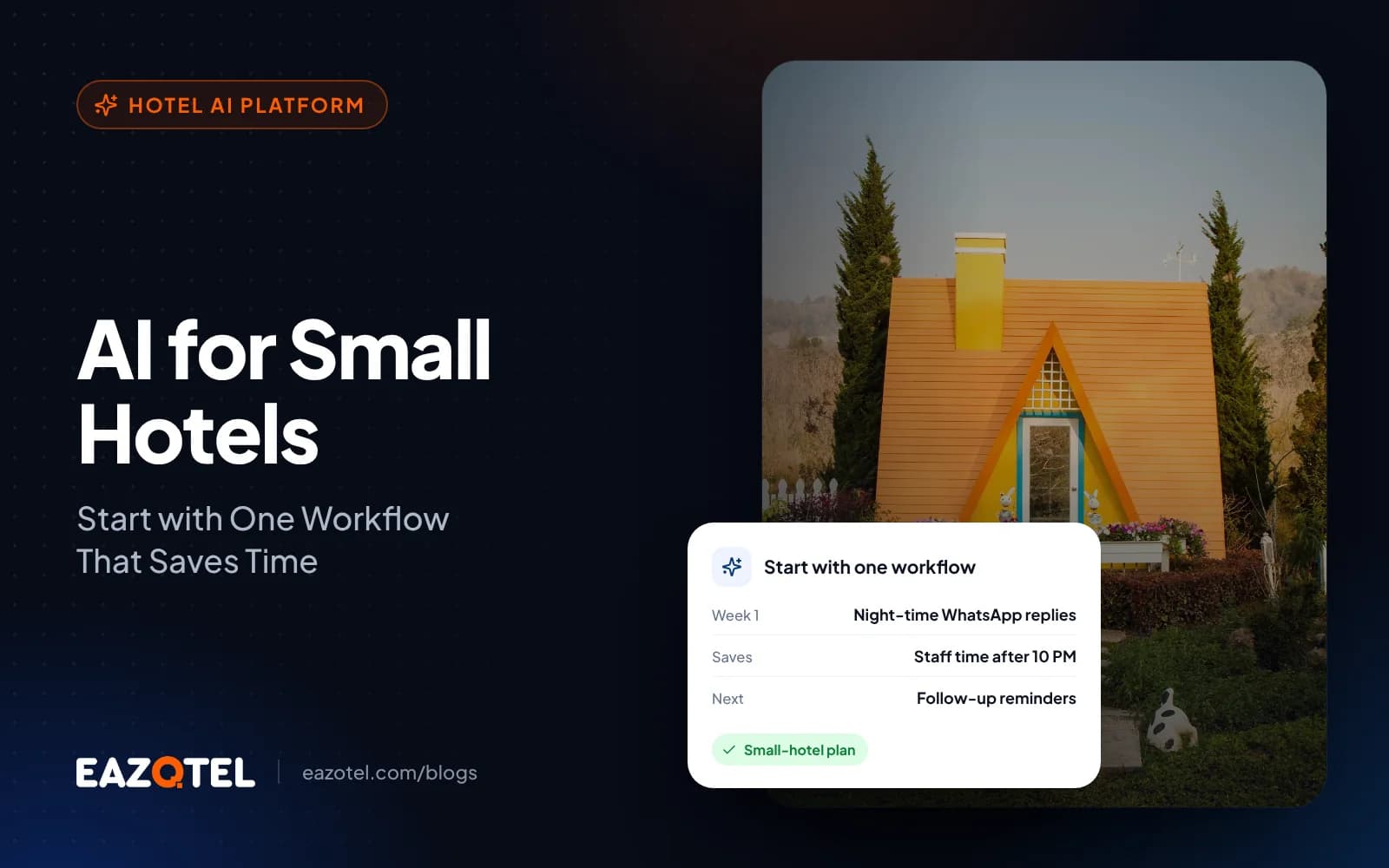
Select one workflow with an observable result. “Reduce unanswered evening enquiries” is a clearer project than “automate the hotel.” Define what counts as a useful answer and who receives exceptions.
Prepare the information first
Create approved room descriptions, inclusions, arrival directions and policy explanations. Assign an owner to update them. Rates and availability require current verification; an old rate card is not a substitute for a live reservation source.
An illustrative pilot could answer routine website questions and collect dates for the morning reservations team. It should explain the next step without promising that a room is held.
Train a small team to use the handover
Staff need to see what the assistant collected, what remains unanswered and when the guest expects a reply. Practice a simple enquiry, a family request and a complaint before launch. A guest asking for a person should receive a clear route.
Budget for subscriptions, setup and any channel usage. Compare those costs with observed staff time saved and additional confirmed bookings, avoiding assumptions that every automated conversation creates revenue.
Expand after the pilot works
Review sample conversations and booking outcomes weekly. If answers are correct but staff do not complete handovers, fix ownership before adding channels. If guests abandon a long qualification flow, reduce the questions.
The best small-hotel system is one employees can maintain during a busy shift. Simplicity, accurate information and visible responsibility are useful buying criteria.
A practical check for your hotel
Give an employee ten ordinary evening enquiries and compare the existing process with the proposed small-hotel pilot.
Routine facts should be correct, unresolved requests should reach staff and the next-day team should understand the collected details.
Measure the result: Measure useful coverage and staff handling effort without counting every automated reply as a sale.
Questions hotel teams ask
Do we need a large database to start?
No. A current, approved property information set and a defined enquiry workflow can support a small pilot. Revenue analysis requires additional outcome data.
How do we know the pilot worked?
Compare meaningful response coverage, staff handling time and confirmed outcomes against a similar baseline period.
Put the workflow into practice
Explore Eazotel as your AI Hospitality Platform. Bring your property's current workflow to a consultation and ask the team to demonstrate the relevant capabilities, connections and handovers for your hotel.
Related guides
- AI Hospitality Platform: Connect Hotel Marketing, Conversations and Bookings
- AI for Hotel Groups: Share Standards, Keep Property Context
- Hotel Software Integrations: Questions to Ask Before You Buy