Blogs AI for Hotel Groups: Share Standards, Keep Property Context
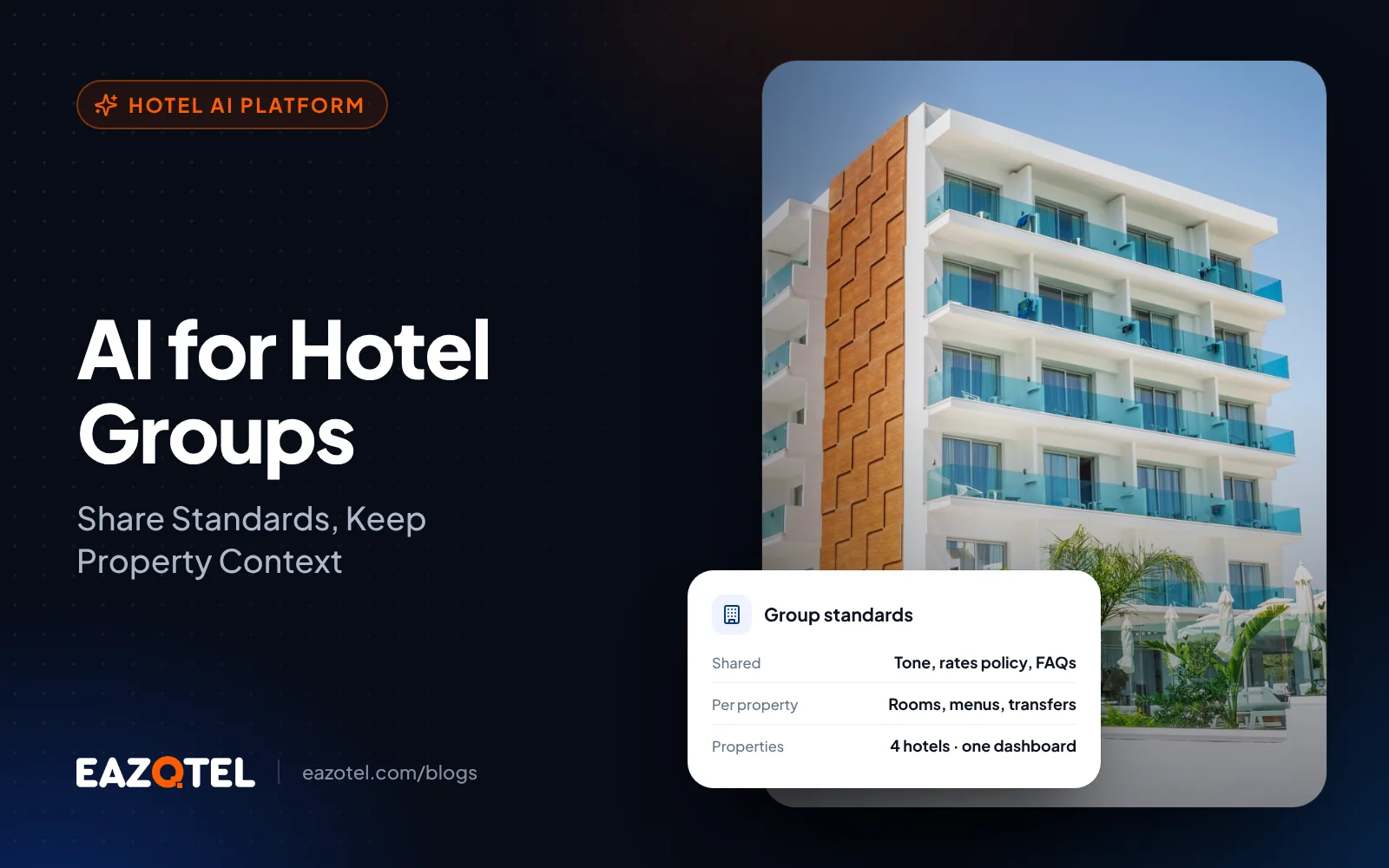
AI for Hotel Groups: Share Standards, Keep Property Context
A hotel group benefits from central standards, but guests need answers for a particular property. A shared assistant becomes risky when it mixes a beach resort’s facilities with a city hotel’s policies.
Make property identity explicit
Every conversation, quotation and booking should carry a property identifier. The knowledge source should separate group-wide guidance from local rooms, dining, transport and operating hours. If the property is unclear, ask before answering.
Assign central teams responsibility for common standards and local managers responsibility for local facts. Changes need an effective date so expired offers do not remain in automated replies.
Route leads according to actual needs
An enquiry can be routed by requested property, travel purpose, language or staff availability. An alternative property may be appropriate when the original one is sold out, but the guest should understand the suggestion.
For example, a meeting enquiry for a hotel without event space can reach the group’s events team. That handover should carry the guest’s requirements and state which property first received the request.
Compare performance fairly
Group reporting should separate market demand from team execution. A resort with long planning cycles and a business hotel with same-day enquiries need different operational comparisons.
Standardise lead-stage definitions, currency treatment and cancellation handling. Report booking results by property before combining them. A group total can hide a local routing failure or an overloaded reservations team.
Test access and ownership
Demonstrate whether local employees see only their permitted records and whether central staff can review exceptions. Verify that reassigning an enquiry does not lose communication history or start duplicate follow-ups.
Measure misrouted leads, contradictory answers, handover delays and property-level booking outcomes. Group automation succeeds when common processes help individual hotels serve guests more accurately.
A practical check for your hotel
Ask the same facility question for two properties with deliberately different facilities and operating hours.
The assistant should identify the requested property and use its approved facts, even when the brand and guest profile are shared.
Measure the result: Review wrong-property answers, misrouted enquiries and local handovers left unaccepted.
Questions hotel teams ask
Should every hotel use the same messages?
Use shared tone and process standards, but keep rooms, offers, directions and policies specific to the relevant property.
Who should own group data quality?
Appoint a central process owner and a named information owner at each property. Both responsibilities are necessary.
Put the workflow into practice
Explore Eazotel as your AI Hospitality Platform. Bring your property's current workflow to a consultation and ask the team to demonstrate the relevant capabilities, connections and handovers for your hotel.
Related guides
- AI Hospitality Platform: Connect Hotel Marketing, Conversations and Bookings
- Hotel AI ROI: Calculate Value Beyond Faster Replies
- Hotel AI Access Controls: Give Teams Useful Data with Clear Boundaries